Tesla MCI
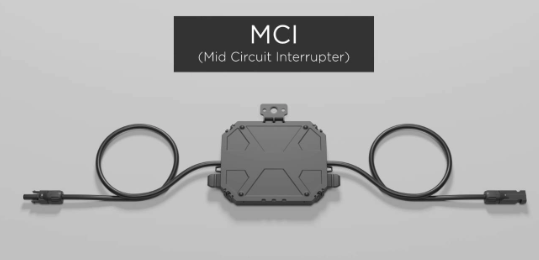
MCI = Mid-Circuit Interrupter
The Tesla Mid‑Circuit Interrupter (MCI) is a safety device installed within PV strings and arrays to meet the Rapid Shutdown requirements of NEC 690.12 (2017 and 2020). When paired with Tesla inverters, the system automatically initiates rapid shutdown whenever AC power is lost or the system shutdown switch is activated.
The MCI works with the Tesla inverter to provide rapid shutdown functionality. When shutdown is triggered, the relay inside each MCI opens, interrupting the circuit and reducing the voltage inside and outside the array to meet code‑required safety limits.
MCI Placement and Code Requirements
In the 2020 National Electric Code, the term "PV Hazard Control System" replaces the previously used terminology of "PV Rapid Shutdown Array" in the 2017 NEC.
How many MCIs are needed for a PVHCS array?
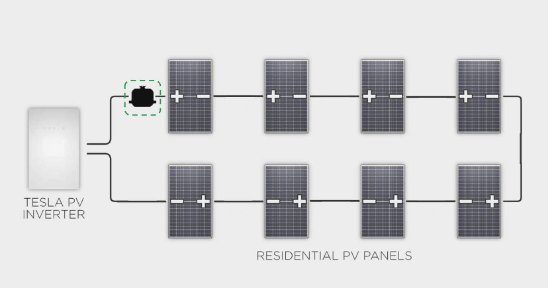
An MCI must be installed at one end of each string and sub-array. It does not matter if the MCI is installed on the positive or negative end.
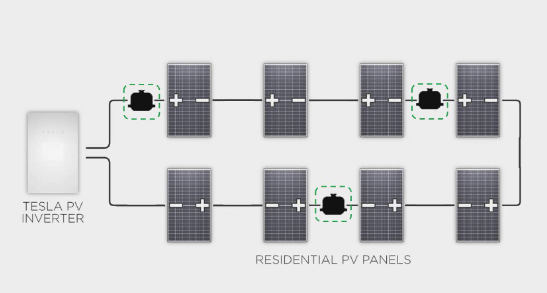
For a PV Hazard Control System, we are required to install 1 MCI after no more than every third module.
Each MCI is installed “in-line” with up to 3 PV modules, although less modules can be between MCIs depending on the array layout and needs.
Ensure no more than 5 MCIs are connected per PV string.
NOTE: In extremely cold climates where the VOC for 3 modules is greater than 165 VDC, MCIs must be installed after every 2 modules.
Rules and Best Practices
One MCI must be after the first or the last module of each string.
PVHCS systems require one MCI after no more than every 3 modules.
No more than 5 MCIs total per PV string.
Each array and subarray requires one MCI on the first or last module of that string.
Always keep a string diagram with you during layout and installation.
Mark the location of all MCIs on your string diagram for future service.
There is no minimum number of MCIs that are required for Tesla inverter products to function. MCIs are used solely to meet code compliance requirements of the NEC.
Installing MCIs
The MCI features three mounting holes. These mounting holes allow the MCI to be mounted with screws or bolts.
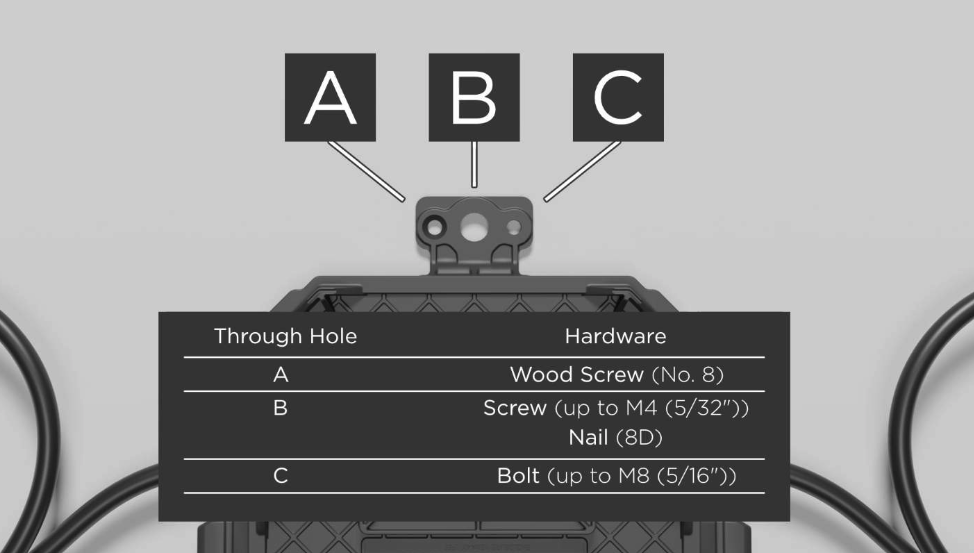
MCIs may be mounted:
Directly to the rail
Bolted to module frame holes
Using an appropriate module hardware bracket
Key points to remember:
1. Systems connected to Tesla inverter products, with Tesla MCIs, using Tesla modules, mounted with Zep hardware are considered a listed Photovoltaic Hazard Control System (PVHCS).
2. For a UL-3741 listed rapid shutdown array, the maximum inside-the-array voltage is 165 VDC after initiating rapid shutdown.
3. The maximum number of MCIs per string is 5.
4. There could be up to 3 modules between each MCI.
5. An MCI must be placed at either the beginning or end of each string and array.
You are now ready to install Tesla MCIs!
Related Articles
Tesla Inverter installtion Guide
Tesla Solar Inverter Overview The Tesla Solar Inverter is a crucial component of Tesla's solar energy solutions, converting DC power from solar panels into AC power for home use. . It's designed for seamless integration with Tesla's ecosystem, ...Tesla Powerwall 3
Tesla Powerwall 3 Overview The Tesla Powerwall 3 is a fully integrated solar and battery system designed to accelerate the transition to sustainable energy. It offers whole-home backup, cost savings, and energy independence by allowing homeowners to ...IronRidge Rooftop Installation Video
How to Install the IronRidge Racking System Check out the short video below to learn how to install the IronRidge Racking System on a rooftop. This video will go over the basics of the IronRidge Racking System. For more detailed instructions download ...